







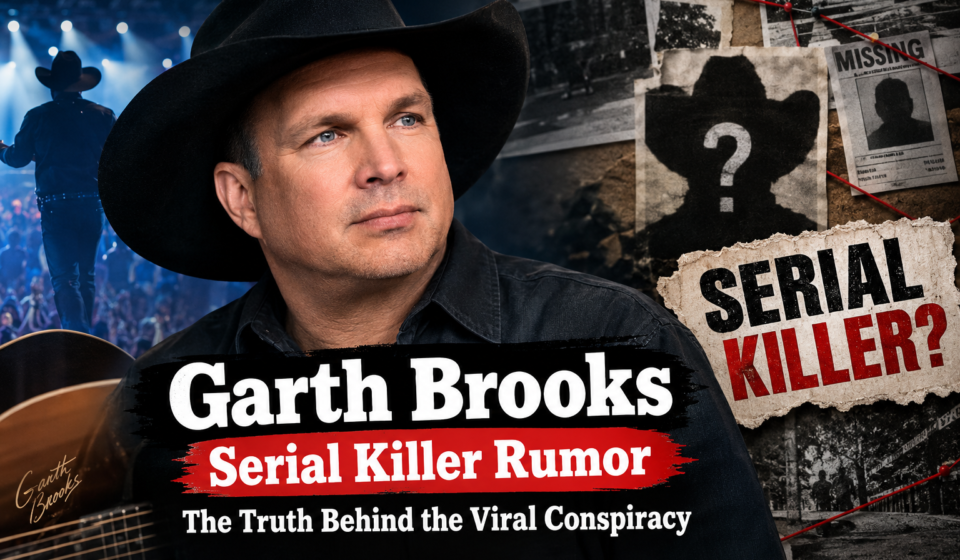
Garth Brooks Serial Killer: The Real Story Behind the Internet Rumor
If you have recently searched for Garth Brooks serial killer, you may have wondered how one of country music’s biggest stars became associated with such a disturbing claim. Garth Brooks has spent decades building a successful career through hit songs, sold-out concerts, and a loyal fan base. Yet, somewhere along the way, an unusual internet rumor began connecting his name with serial murder, leaving many people curious about whether there is any truth behind the story.
The short answer is that there is no credible public evidence establishing that Garth Brooks is a serial killer. The claim is widely associated with internet jokes, comedy, and online speculation rather than a verified criminal investigation. Still, the story is interesting from an internet culture perspective because it shows how a strange joke can spread far beyond its original audience. To understand the rumor, it helps to look at Brooks’s background, the comedy behind the claim, and the reasons people continue searching for it.
Who Is Garth Brooks?
Garth Brooks was born Troyal Garth Brooks on February 7, 1962, in Tulsa, Oklahoma. He became one of the most recognizable names in American country music by blending traditional country sounds with elements of rock and pop. His energetic performances helped change the way many artists approached live country shows, while his songs connected with listeners through familiar themes of love, heartbreak, friendship, and everyday life.
Over the years, Brooks released numerous successful songs, including The Dance, Friends in Low Places, and If Tomorrow Never Comes. His career brought him major awards, commercial success, and audiences that extended well beyond traditional country music fans. For most people, his name is associated with music and entertainment. The Garth Brooks serial killer rumor is a separate internet phenomenon, not an established part of his personal history.
Where Did the Garth Brooks Serial Killer Rumor Come From?
The rumor is closely associated with internet comedy, particularly jokes connected to comedian Tom Segura. The premise is deliberately bizarre: it takes a familiar celebrity and places him in an imaginary criminal scenario. The contrast between Brooks’s public image as a country music star and the disturbing accusation is part of what makes the joke surprising to people who encounter it for the first time.
As the joke spread, it began appearing in online conversations, memes, videos, and discussions about unusual celebrity conspiracies. Some people understood the comedic context immediately, while others discovered the phrase without knowing where it originated. That difference matters because a joke can sound like a serious allegation when it is repeated without explanation. The fact that a rumor becomes popular online does not mean it is supported by evidence.
Why Are People Talking About Garth Brooks and Serial Killing?
Part of the fascination comes from the unexpected nature of the claim. People generally associate Brooks with country music, major concerts, and a long entertainment career, so seeing his name connected to a serial-killer conspiracy naturally raises questions. Some users search for the phrase because they have seen a meme, while others want to know whether the story refers to a real investigation.
Social media can make these rumors even more noticeable. A strange claim may be repeated by different accounts, discussed in comment sections, and turned into videos that attract new viewers. Eventually, people who have never encountered the original joke may assume there must be a substantial story behind it. In reality, online attention can be driven by humor and curiosity alone. A viral story and a verified news report are two very different things.
Are His Concert Locations Connected to Unsolved Crimes?
Some versions of the conspiracy attempt to connect Brooks’s concert schedule with missing-person reports or unsolved murders. These claims often compare locations and dates, then suggest that the apparent overlap deserves suspicion. At first glance, such comparisons may seem intriguing, especially when they are presented in a dramatic video or a long list of supposedly suspicious coincidences.
However, there is a major flaw in that reasoning. A touring musician visits numerous cities over many years, and crimes occur in cities across the country. With enough dates and locations, unrelated events will inevitably overlap. That does not establish a connection between them. A shared location or a coincidental date is not evidence of murder. Any serious accusation would require reliable information directly connecting a person to a specific crime.
What Does Chris Gaines Have to Do With the Rumor?
Another detail that sometimes comes up in discussions about Brooks is Chris Gaines, a fictional musical persona he introduced in 1999. The character was created as part of an experimental entertainment project and had a different appearance, background, and musical style from Brooks’s familiar country identity. The project allowed him to explore a rock-inspired sound and present his work through an alternative character.
Because the idea was unusual, Chris Gaines has occasionally become material for internet jokes and speculation. Some people use the character as another detail in their theories, but there is no credible evidence connecting the fictional persona to criminal activity. Musicians regularly experiment with stage names, alter egos, and fictional identities. Creating a character for an artistic project is not evidence of a hidden criminal life.
Is There Any Evidence That Garth Brooks Is a Serial Killer?
This is the most important question behind the entire search term. When a rumor involves an accusation as serious as serial murder, it is worth looking beyond social media posts and asking whether reliable sources support the claim. Genuine criminal cases involve evidence, documented findings, and investigations that can be examined rather than conclusions built around speculation.
There is no credible public evidence establishing that Brooks is responsible for serial murders. Online discussions may repeat the allegation or point to supposed coincidences, but repetition does not turn an unsupported claim into a fact. It is also important to avoid confusing a lack of evidence for a rumor with proof of every detail of a person’s private life. The reasonable conclusion is straightforward: the serial-killer allegation against Garth Brooks remains unsupported by credible public evidence.
How Internet Jokes Turn Into Celebrity Conspiracies
The internet has a habit of giving unusual jokes a life of their own. A comedian makes an absurd statement, an audience repeats it, and social media users begin creating their own versions. Some posts remain clearly humorous, but others remove the original context or present the claim in a serious tone. Someone encountering the story later may have no easy way of knowing where the idea began.
This process can make a fictional claim appear more substantial than it really is. When several accounts repeat the same allegation, readers may mistake repetition for independent confirmation, even if every post traces back to the same joke. The Garth Brooks serial killer rumor illustrates why context is so important. Before accepting a shocking claim about a real person, readers should look for the original source and check whether reliable evidence supports it.
How to Check Whether a Celebrity Rumor Is True
A little research can help prevent confusion when an unusual story appears online. Start by identifying the original source and checking whether the claim was presented as comedy, satire, personal opinion, or factual reporting. The distinction may explain why a statement that sounds serious in one post was originally intended as a joke.
Next, look for independent reporting from reputable news organizations and any relevant, verifiable public records. Be cautious if a story relies mainly on anonymous comments, edited clips, suspicious-looking timelines, or coincidences without direct evidence. It is also worth asking whether the sources actually provide new information or simply repeat what someone else has said. Good fact-checking means examining the evidence, not just counting how many people repeat a claim.
Why the Truth Matters
It can be tempting to share a shocking celebrity rumor simply because it sounds unbelievable. However, serious criminal allegations can affect a person’s reputation, especially when readers mistake entertainment for factual reporting. Even a joke that begins harmlessly can create confusion when it circulates without the context that originally made it humorous.
That does not mean people cannot discuss unusual internet trends or explore why a particular conspiracy became popular. It simply means the discussion should be honest about what is known and what remains unsupported. In this case, explaining the comedic origins of the rumor is more informative than presenting it as a real criminal mystery. Responsible writing allows readers to understand the internet phenomenon without spreading a false impression about the person involved.
Conclusion
The Garth Brooks serial killer rumor is a strange example of how internet comedy can turn into a widely discussed celebrity conspiracy. The claim attracts attention because it contrasts sharply with Brooks’s familiar identity as a successful country music star. However, there is no credible public evidence establishing that he is a serial killer, and the rumor should not be presented as a confirmed criminal story.
Looking beyond the sensational wording reveals a more useful explanation: online jokes can spread, lose their original context, and become confusing to people who encounter them later. Concert locations, fictional musical personas, and repeated social media posts are not proof of criminal activity. By checking reliable sources and separating speculation from documented facts, readers can understand why the story attracts attention without mistaking it for reality.
Frequently Asked Questions
1. Is Garth Brooks really a serial killer?
There is no credible public evidence establishing that Garth Brooks is a serial killer. The claim is associated with internet humor and speculation, not a verified criminal case.
2. Who started the Garth Brooks serial killer rumor?
The rumor became associated with internet comedy, including jokes connected to comedian Tom Segura. Its spread through social media helped the unusual premise reach a wider audience.
3. Why do people connect his concert locations with murders?
Some online theories compare concert dates and locations with unrelated crimes. Such comparisons can create apparent coincidences, but they do not establish criminal involvement.
4. Who is Chris Gaines?
Chris Gaines is a fictional musical persona created by Garth Brooks for an experimental entertainment project in 1999. The character is not evidence of a secret criminal identity.
5. How can I verify the Garth Brooks serial killer claim?
Check reputable news coverage, reliable public records, and the original context of the claim. Avoid treating social media posts, jokes, or coincidences as proof of a serious accusation.



[…] Garth Brooks Serial Killer: The Real Story Behind the Internet Rumorby adminOctober 19, 2026 […]